

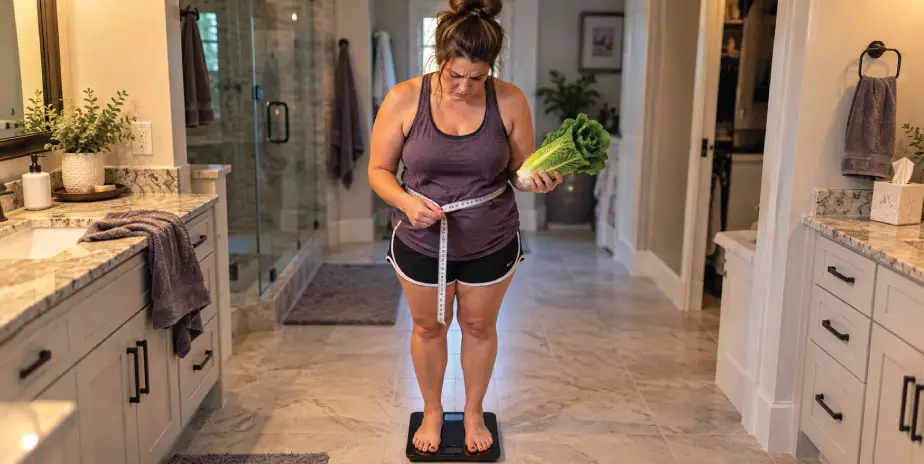
The Road Ahead: Why Your Transformation Won’t Take 12 Weeks
Want to lose weight fast? Before you set another deadline, let’s talk about what it really takes to lose weight, get healthy, and keep the results.
The 12-Week Trap
I can’t tell you how many times I’ve heard someone say, “I need to lose 30 pounds before my wedding,” or “I’ve got 12 weeks to get in shape for vacation.”
I get it. Believe me, I get it.
For years, I did the exact same thing.
Every year, I’d decide I was going to lose weight for summer. I’d give myself 12 weeks. Plenty of time, right?
Except I wouldn’t make the changes I needed to make.
Suddenly, 12 weeks became 10. Ten became eight. Eight became six.
And before I knew it, another summer had arrived. Another summer avoiding the pool, refusing to take off my shirt, and wearing a hoodie whenever I could get away with it.
I’d failed again.
But looking back, I understand why.
I wasn’t trying to change my life. I was trying to change how I looked for the summer.
And those are two very different things.
Forget the Wedding. Forget the Vacation.
I’ve had this conversation with clients more times than I can count.
Someone comes to me wanting to lose 20 or 30 pounds before an event. A wedding, a graduation, a vacation. Whatever it happens to be.
And I tell them something they probably weren’t expecting.
Forget the event.
Go to that wedding. Enjoy that vacation. Be the work in progress you are.
Because I’d rather help you become someone who never has to worry about losing weight for another event than help you chase a number on the scale for the next 12 weeks.
That’s not to say you can’t lose significant weight in 12 weeks. Depending on your starting point and circumstances, you absolutely might.
But what happens on week 13?
If all you’ve done is temporarily change your eating habits and exercise routine to reach a deadline, what happens when that deadline passes?
That’s the problem with treating weight loss like an event.
Your health doesn’t have an expiration date. Neither should your commitment to it.
How to Lose Weight and Keep It Off
Here’s something I want you to understand.
Losing weight isn’t necessarily the hard part. Building a lifestyle that allows you to maintain that weight loss? That’s where the real transformation happens.
When I finally made the decision to change my life, I stopped thinking about summer.
I started thinking about me.
I wasn’t going to eat just because I was bored anymore. I decided to eat to live, not live to eat.
I was going to be physically active every day. Lifting weights, walking, whatever I could do to keep moving.
I wasn’t going to drink excessively. Eventually, I gave up tobacco and nicotine.
But here’s the important part.
I didn’t change everything overnight.
At first, I told myself I could give up the pasta, cake, and beer, but there was no way I was giving up tobacco.
Eventually, I decided I could give up tobacco, but nicotine? Absolutely not.
Until I was ready to give that up, too.
It was a process.
And that’s what I want people to understand about transformation. You don’t have to become a completely different person by Monday morning.
You have to start making decisions that move you toward the person you want to become.
Then you keep making them.
The Scale Doesn’t Tell the Whole Story
Let’s say you want to lose 30 pounds.
You start exercising. You’re eating better. You’re following your program.
Six weeks go by, and the scale hasn’t moved nearly as much as you’d hoped.
Frustrating? Absolutely.
But before you decide nothing’s working, let’s look at what’s actually happening.
When I work with clients, two measurements I pay particular attention to are body fat percentage and waist circumference.
Why?
Because your weight doesn’t tell me everything about your body composition.
You can lose fat while gaining muscle. Your waist can get smaller even when your weight changes very little. Your clothes might fit differently. You might notice some definition in your arms or shoulders that wasn’t there before.
And beyond appearance, maybe you’re lifting heavier weights. Walking farther. Sleeping better. Getting through your day with more energy.
That’s progress.
Now, if your weight, measurements, and other indicators aren’t moving in the direction we want, we’re going to figure out why and make adjustments.
But don’t let one number convince you that all your hard work means nothing.
Looking good isn’t the goal. Looking good is a byproduct of being healthy.
The Moment I Knew I’d Changed
I lost roughly 100 pounds during my own transformation.
And somewhere along the way, something happened that I’ll never forget.
I was in the gym locker room getting changed. By this point, I’d completely changed how I lived.
I was eating better, exercising consistently, and taking care of myself. My body had changed dramatically. I had more energy than I could remember having in my entire adult life.
I was practically bouncing around the gym.
There was another guy in the locker room, probably in his early 20s. Jacked. Clearly someone who took his fitness seriously.
He looked over at me and said two words.
“Looking good.”
That was it.
Two words.
But in that moment, something clicked.
For years, I’d been the guy who weighed nearly 300 pounds. The guy who got out of breath tying his shoes. The guy who wouldn’t take his shirt off at the pool.
And suddenly, I felt like I belonged to a different life.
I took a picture of myself that day.
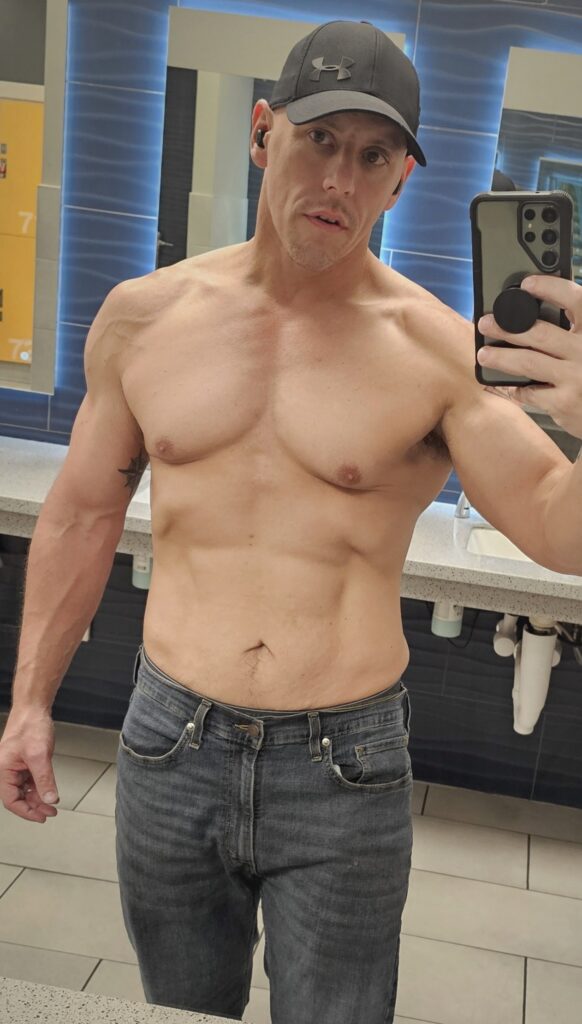
Not because I’d reached some magical number on the scale.
But because, for the first time, I really recognized the person I’d worked so hard to become.
Here’s the thing, though.
I hadn’t become that person because someone complimented me.
I’d become that person through all the decisions I’d made before that moment.
The compliment just helped me see it.
Discipline Doesn’t Mean Perfection
Before I changed my mindset, a bad day meant failure.
If I ate something I shouldn’t have or skipped a workout, I’d beat myself up. I’d tell myself I wasn’t capable of changing.
And sometimes that negative self-talk was more damaging than the mistake itself.
Eventually, I learned to give myself a little grace.
I’m going to slip. I’m going to make mistakes. So are you.
That doesn’t mean you’ve lost your discipline.
Discipline is getting back to it.
You slipped? Okay. Learn from it. Move forward.
Now, don’t misunderstand me. If you’re making excuses every single day, that’s a different conversation. Accountability matters. The work still needs to get done.
But one bad decision doesn’t erase all the good decisions you’ve made.
Discipline isn’t about never making mistakes. It’s about not letting those mistakes become your excuse to quit.
Your Next 12 Weeks
So, how do you lose 20 pounds? Or 30? Or 100?
You start by understanding that the number on the scale is only one part of the journey.
You develop healthier eating habits. You become physically active. You build strength. You learn consistency. You make adjustments when something isn’t working.
And somewhere along the way, you start seeing yourself differently.
Not just as someone who wants to be healthy, but as someone who lives that way.
Maybe you’ll reach your weight-loss goal in 12 weeks. Maybe it’ll take six months, a year, or longer.
That’s okay.
Because those weeks and months aren’t time you’re waiting for your life to change.
They’re the time you’re spending changing it.
So forget getting ready for summer.
Get ready for the rest of your life.
I don’t coach for 12 weeks.
I coach for the next 30 years of your life.

About Alan Sott Fitness
Alan Sott Fitness is personal training built around real results, long-term health, and consistency over shortcuts. Founded by Alan Sott, a certified personal trainer who lost 100 pounds on his own fitness journey, ASF helps clients build strength, improve their health, and create lasting change through personalized training, practical nutrition guidance, and accountability. Serving Florida’s Treasure Coast in person and clients anywhere through virtual training, Alan’s philosophy is simple: Control the weight. Don’t let the weight control you.
Are you ready? Let’s get to work.
Research Sources
CDC — Steps for Losing Weight: Supports gradual, sustainable weight loss, realistic expectations, and recovering from setbacks.
CDC — Tips for Keeping Weight Off: Supports the importance of long-term eating habits, physical activity, and consistency.
CDC — Healthy Weight: Provides context for waist circumference and why scale weight alone is an incomplete health indicator.